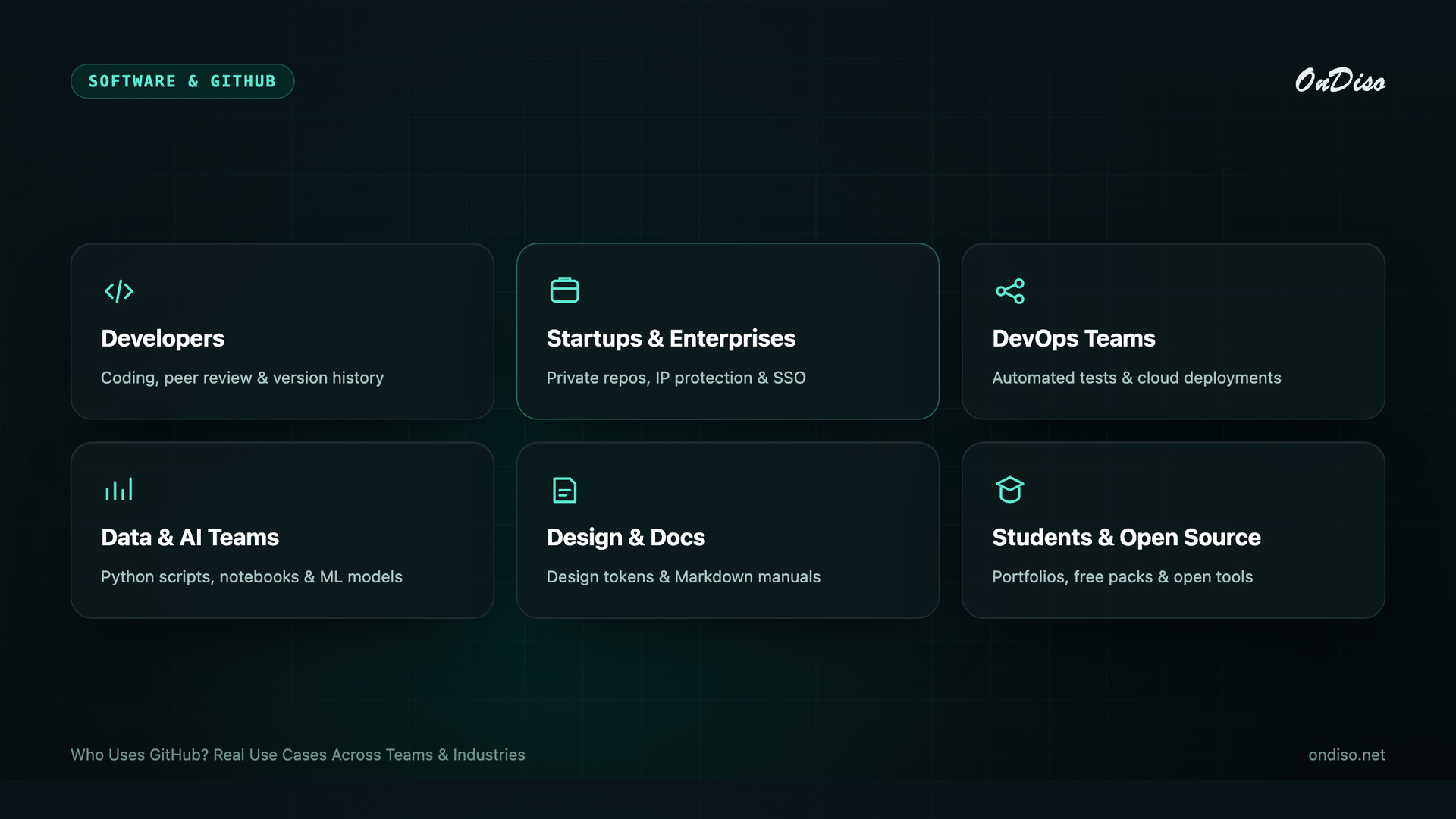
GitHub is used not only by individual software programmers, but across startups, Fortune 500 enterprises, DevOps engineers, data science and AI teams, UX/UI designers, technical writers, and students. Each role relies on GitHub for version control, peer code reviews, automated testing, documentation, and verified open-source software access.
Is GitHub Only for Software Programmers?
From the outside, GitHub looks like a platform strictly for coders. Inside modern digital teams, however, product managers, UX designers, data researchers, technical writers, and business stakeholders interact with GitHub every week.
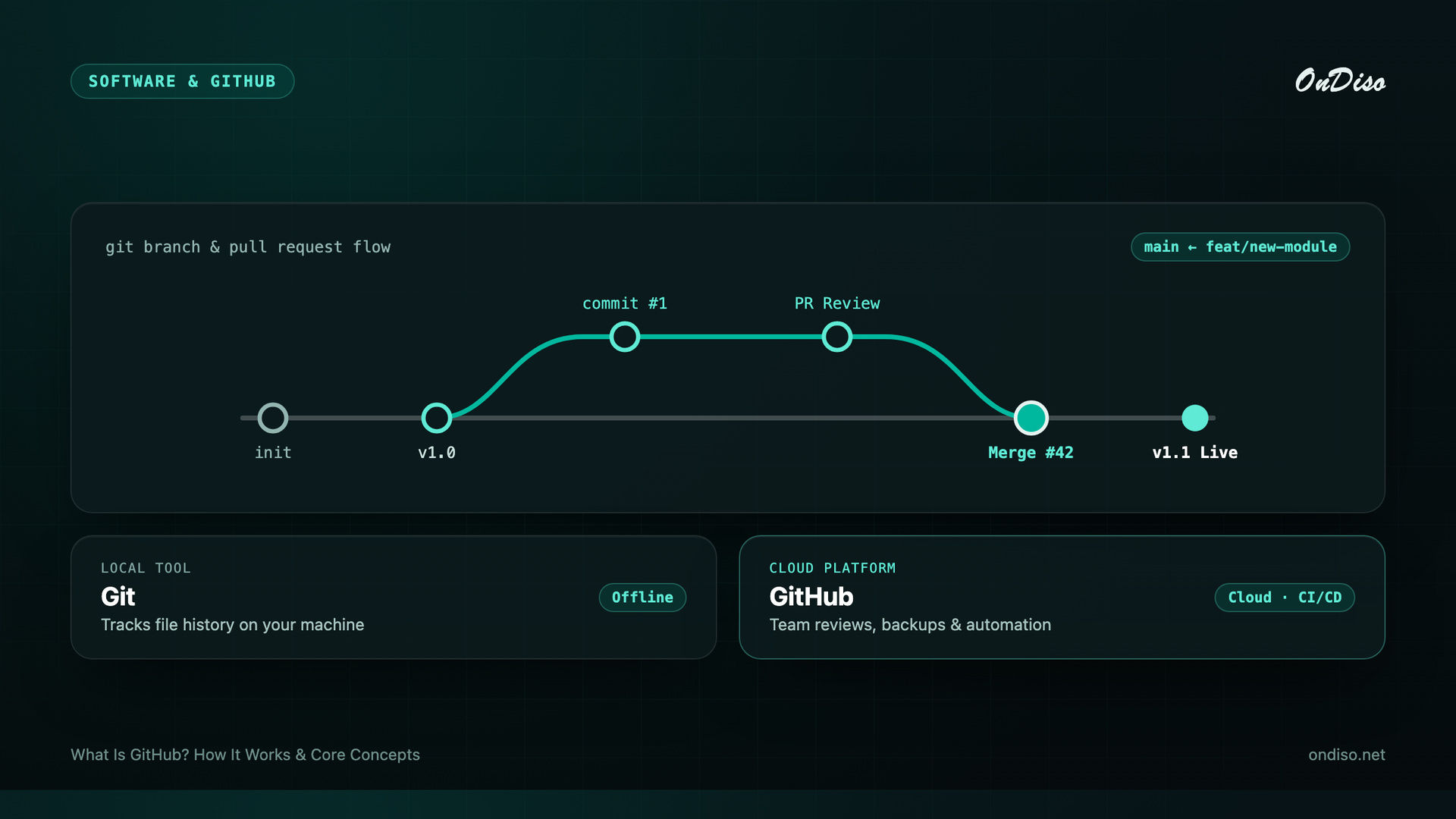
If you are new to the platform's building blocks, start with our What Is GitHub? guide. The reason so many roles converge here is simple: GitHub records every file edit transparently—who changed what, when, and why.
Who Uses GitHub? Key Roles and Daily Use Cases
Different teams use the same repository workflow to solve very different operational needs:
| Role / Group | How They Use GitHub | Practical Outcome |
|---|---|---|
| Software & DevOps Engineers | Write code, review Pull Requests, and run CI/CD checks via GitHub Actions. | Conflict-free collaboration and safe releases |
| Startups & Enterprises | Develop products in private repos with secret scanning and role-based access. | Protected IP and fast MVP shipping |
| Data Scientists & AI Teams | Version Python scripts, Jupyter Notebooks, datasets, and ML model configs. | Reproducible experiments across teams |
| Designers & Technical Writers | Sync design tokens and maintain product docs in clean Markdown files. | Tight alignment between design and frontend code |
| Students & Researchers | Store university code and unlock free tools via the GitHub Student Pack. | Verified technical portfolio before graduation |
| Non-Coding End Users | Download packaged desktop or self-hosted apps from repository Releases. | Transparent, community-audited software |
Why Companies Treat GitHub as Core Infrastructure
When a business commissions a website, e-commerce store, or custom SaaS platform, one major risk is losing access to source code if a contractor leaves or a workstation fails. Hosting repositories inside a company-owned GitHub organization prevents that lock-in completely.
- Granular Permissions & Secret Scanning: Control who sees every project and catch leaked API keys automatically before deployment.
- Automated Deployments: Approved Pull Requests deploy directly without fragile manual file uploads.
- Clear Project Visibility: Managers track finished tasks and open bugs directly through Issues and Project boards.
See how we apply clean engineering and automation workflows for client systems on our Projects page.
How Non-Developers Use GitHub Today
Even without writing code, anyone can benefit from GitHub by browsing open-source releases, reporting bugs in public tools, or hosting lightweight documentation sites via GitHub Pages.
In the next guide in this series, we walk through exactly how to download, install, and run an application from GitHub step by step.
Frequently Asked Questions
Does a business need a large engineering department to use GitHub?
No. Even a small company working with one external agency or solo developer benefits from owning its own GitHub organization so all source code remains under company control.
Do hiring managers actually review candidates' GitHub profiles?
Yes. Engineering recruiters regularly inspect commit consistency, code readability, documentation quality, and open-source contributions as proof of practical skill.
Can someone without coding experience download apps from GitHub?
Yes. Most mature open-source projects provide one-click installers (.exe, .dmg, or Docker images) under the Releases tab alongside clear README setup instructions.
Let's plan your project together
Corporate web engineering, e-commerce, custom SaaS, business email plans, or technical SEO — tell us what you are building.