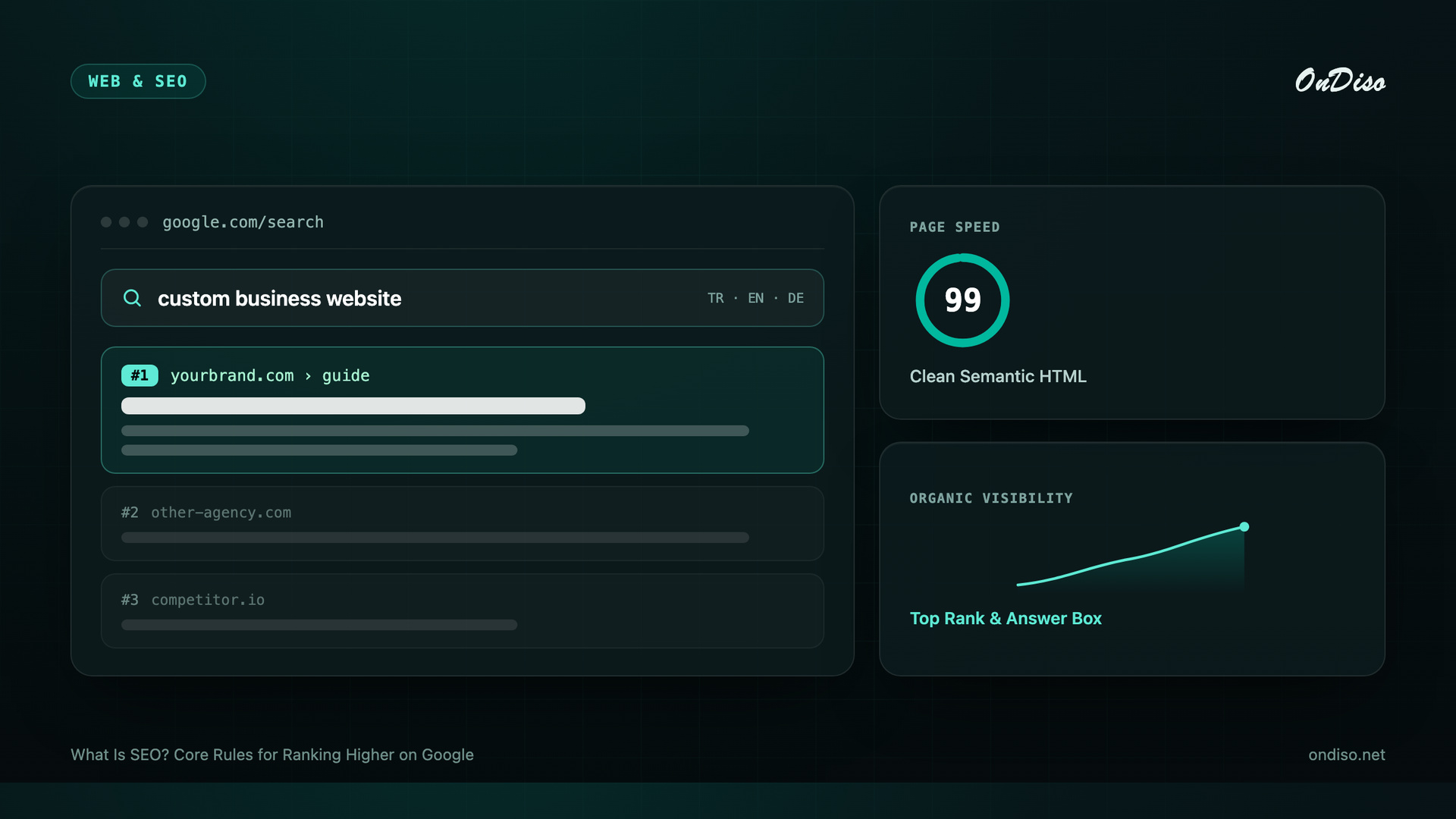
SEO (Search Engine Optimization) is the process of aligning a webpage's technical infrastructure and content with Google search intent to earn organic traffic without paying for ads. Sustainable rankings come from clean HTML markup, fast mobile loading, clear direct answers, and natural internal links.
Which Pages Does Google Actually Promote?
Stretching articles with unnecessary filler words just to hit a high word count backfires today. Search algorithms reward pages that give visitors the fastest, clearest, and most reliable answer to their question.
Effective SEO answers three practical questions: Can crawlers parse the page effortlessly, does it load immediately on mobile devices, and can the reader find the exact answer without wading through fluff? Once those three foundations are solid, relevant keywords fit naturally into the text.
The Three Core Layers of SEO
Rather than treating search optimization as a single checklist item, engineering teams balance technical performance, on-page clarity, and domain trust together:
| Layer | Primary Focus | Direct Impact |
|---|---|---|
| Technical SEO | Loading speed, mobile readiness, canonicals, sitemap.xml, HTTPS, and JSON-LD | Crawl efficiency and clean indexing |
| On-Page SEO | H1–H3 hierarchy, intent-matched headings, natural writing, and internal links | Featured Snippets and relevant keyword rankings |
| Off-Page Authority | Brand mentions, industry citations, and earned backlinks | Trust and competitiveness on commercial terms |
Practical Steps That Drive Rankings
- Match Search Intent First: If a reader searches "what is", provide a concise definition right at the top; if they search "how to", give clear numbered steps.
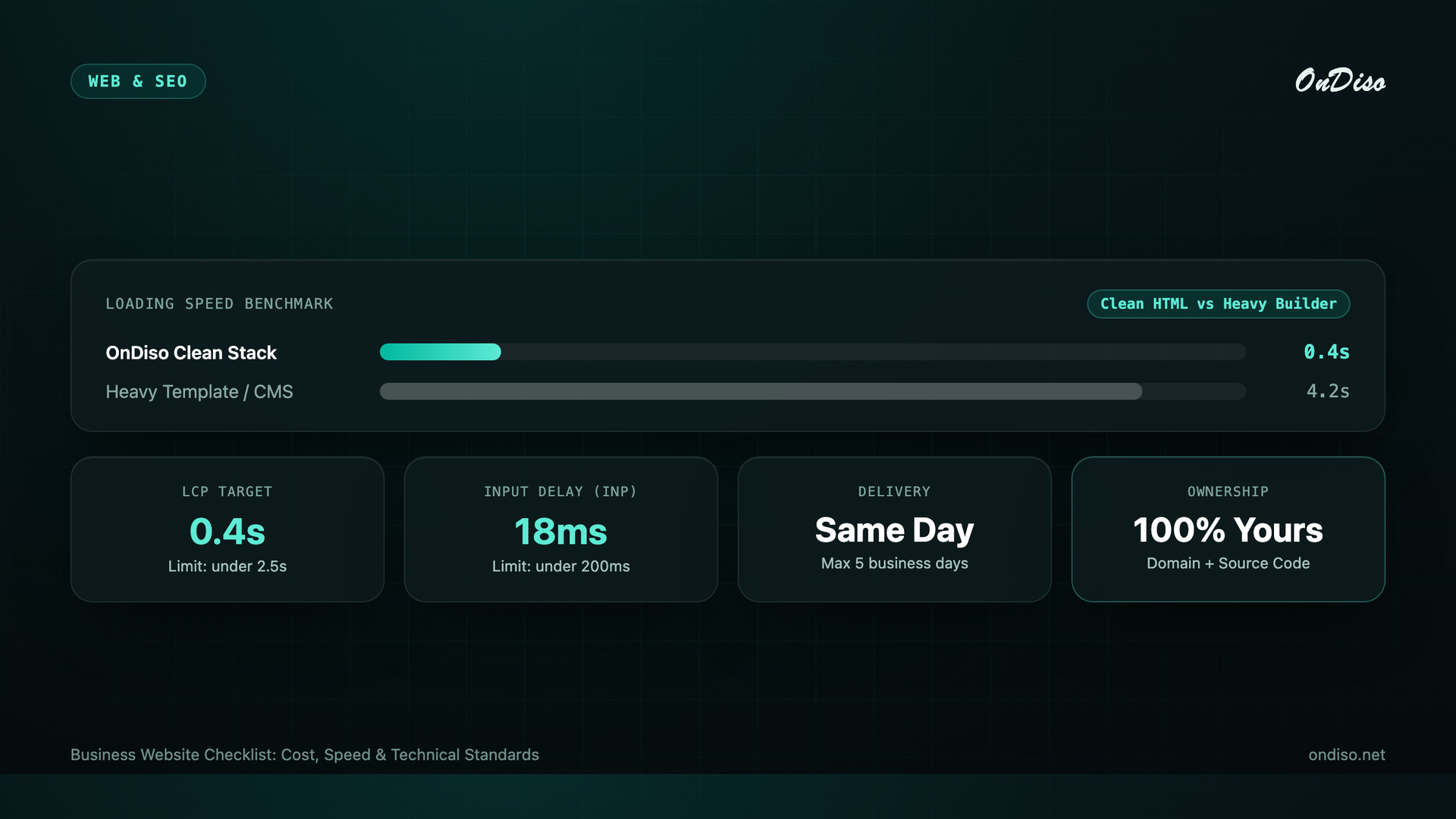
- Keep DOM Weight Low and Speed High: Clean static HTML free from heavy script bundles passes mobile performance thresholds effortlessly.
- Add Structured Data (JSON-LD): Implement accurate
Article,FAQPage, andBreadcrumbListschemas matched to the page content. - Connect Related Guides Naturally: When covering transport security, link contextually to your SSL certificate guide; when discussing URLs, link to your domain naming guide.
Common Mistakes That Hurt Visibility
- Repetitive Filler Paragraphs: Repeating the same point in different phrasing just to inflate length reduces helpfulness signals.
- Robotic Keyword Stuffing: Cramming tag lists or repeating exact keywords unnaturally triggers spam filters instead of rankings.
- Broken Links and Redirect Loops: Internal 404 errors and conflicting
canonicaltags waste crawl budget.
Frequently Asked Questions
Does an article have to be very long to rank #1 on Google?
No. Google evaluates how clearly, completely, and uniquely a page answers the query—not raw word count. A focused 600–900 word guide with direct answers regularly outranks a bloated 2,500-word post.
Is technical SEO alone enough to reach the first page?
Technical SEO opens the door, but it is not enough by itself. Fast, error-free markup must pair with genuinely useful content and clear internal linking.
Let's plan your project together
Corporate web engineering, e-commerce, custom SaaS, business email plans, or technical SEO — tell us what you are building.